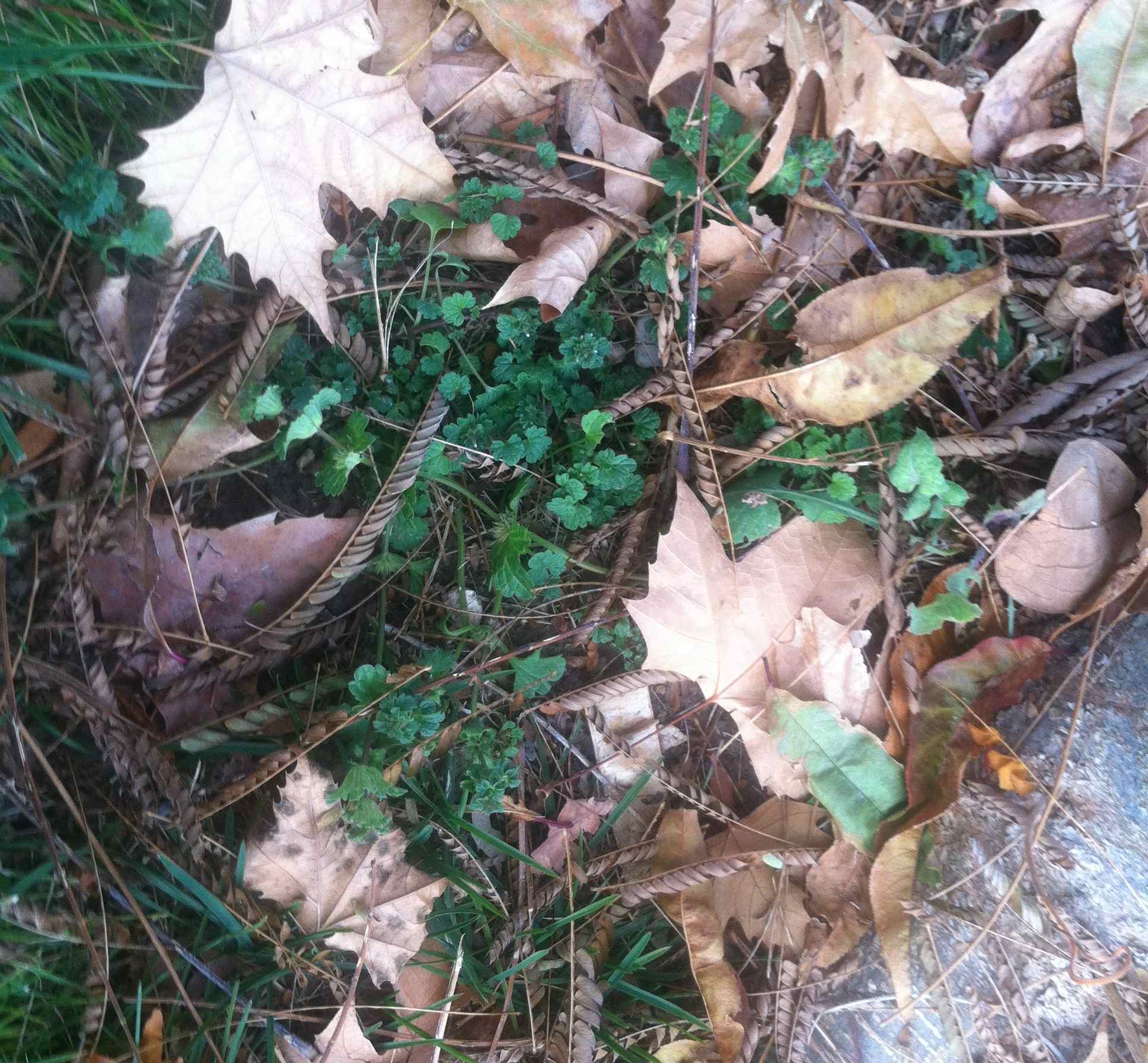
Henbit is a funny weed name. One day a hen bit into this weed and liked it. Or so the story goes. And while I can verify that my hens think it is chicken chocolate, the more crucial knowledge is that common henbit is a what is called a winter annual. It is said to germinate in the fall, winter over and grow during sunny spells, then go to seed in the spring or early summer, only to die in the heat of summer. This means that when I see these weeds in my backyard, all green and flourishing in the fall, I can’t just chuckle to myself and say, “aha! but you will be dead soon!” I actually need to think about pulling it.
If I’m hungry, I can just eat it instead of throwing it to the chickens, although the leaves are a bit hairy and might tickle my tongue. I haven’t tried it, not being convinced that weeds are better food than my normal fare. However, I must admit that there are many foods of the world that I haven’t tried, that grow prolifically; and just because it is a weed in my garden, doesn’t rule it out for everyone.
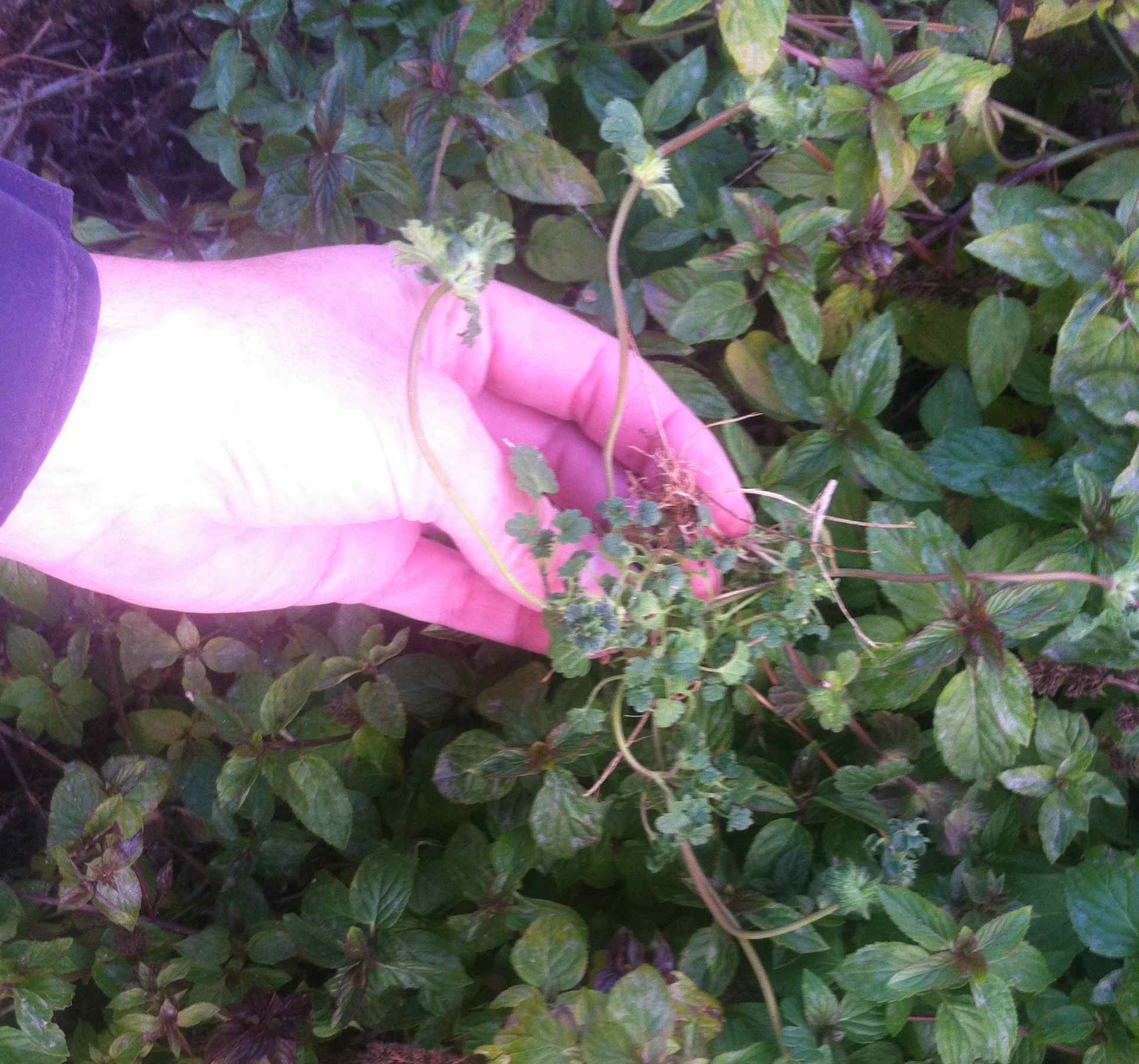
The fact that it is classified with mint has to be somewhat in its favor, but not, apparently in its flavor. It does not smell like mint, either. The reasons given for its relationship seem to be its square stem and spreading habit. It can root from stem nodes that are touching the ground well enough. The squareness of the stem can be easily felt if it is rolled in the hand. But don’t panic yet. It does not have the root system of mint and can be pulled by hand quite easily. The main thing that keeps it from being eradicated is its timing and vast numbers.
Since it is out of sync with the typical weed control schedule, it might help to put down a pre-emergent in the late summer, or 3-5 weeks before it is seen to germinate. This would be counterproductive if any fall crops are being seeded then, so mulching may be the best option for vegetable gardens. Henbit prefers bare and “disturbed” soil to get established. Or it can be left as a cover crop to avoid soil erosion and limit open ground for other weeds. As with most plants, a post-emergent treatment will work best before the weed flowers, but I challenge you to notice the henbit plants before they flower. In my yard, they begin to flower when they are still small. But that doesn’t mean they aren’t going to grow more. They just like to get the show going.
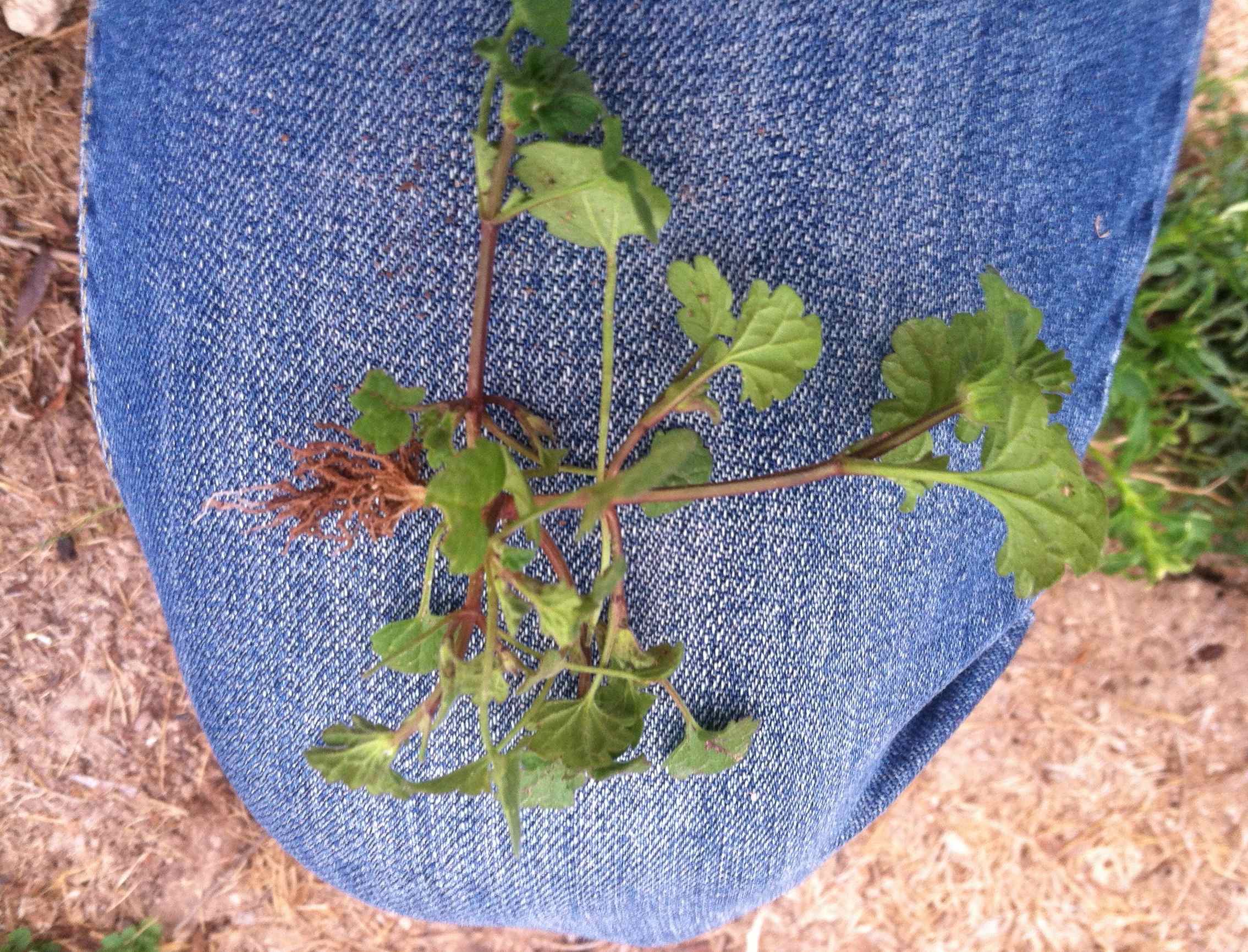
It is certainly one of the prettier weeds in town. With its almost ruffled, circular deep green leaves thickly carpeting the ground; and the tiny trumpet shaped purple flowers. It can cast a hue of purple over a area in early spring well before much other color has arrived. The leaves are what is called sessile (a new vocabulary word for me), meaning they grow directly from the stem without a small branch or petiole. This is the same as the smooth sow thistle, but I hadn’t learned the word when I wrote that article. The leaves on henbit begin appearing near the base, where it also branches. The topmost sets of leaves are where the flowers show up, like they are sitting in dainty fairy bowls. With as many branches as even the smallest henbit plants can have, that is a lot of fairy bowls. The photos of the henbit flowers on this Colorado State website are much better than I was able to take.
The worst thing about trying to pull the henbit is that there can be so many small ones in one area, it takes forever to see visible progress in forming a clearing. With their predisposition to rooting from stems, I don’t like to just hoe them under. A good layer of mulch can help, but some alway peek through, almost chiding me in their pretty little way for locking them in the dungeon. It would be easier if they got ugly when they grew up.
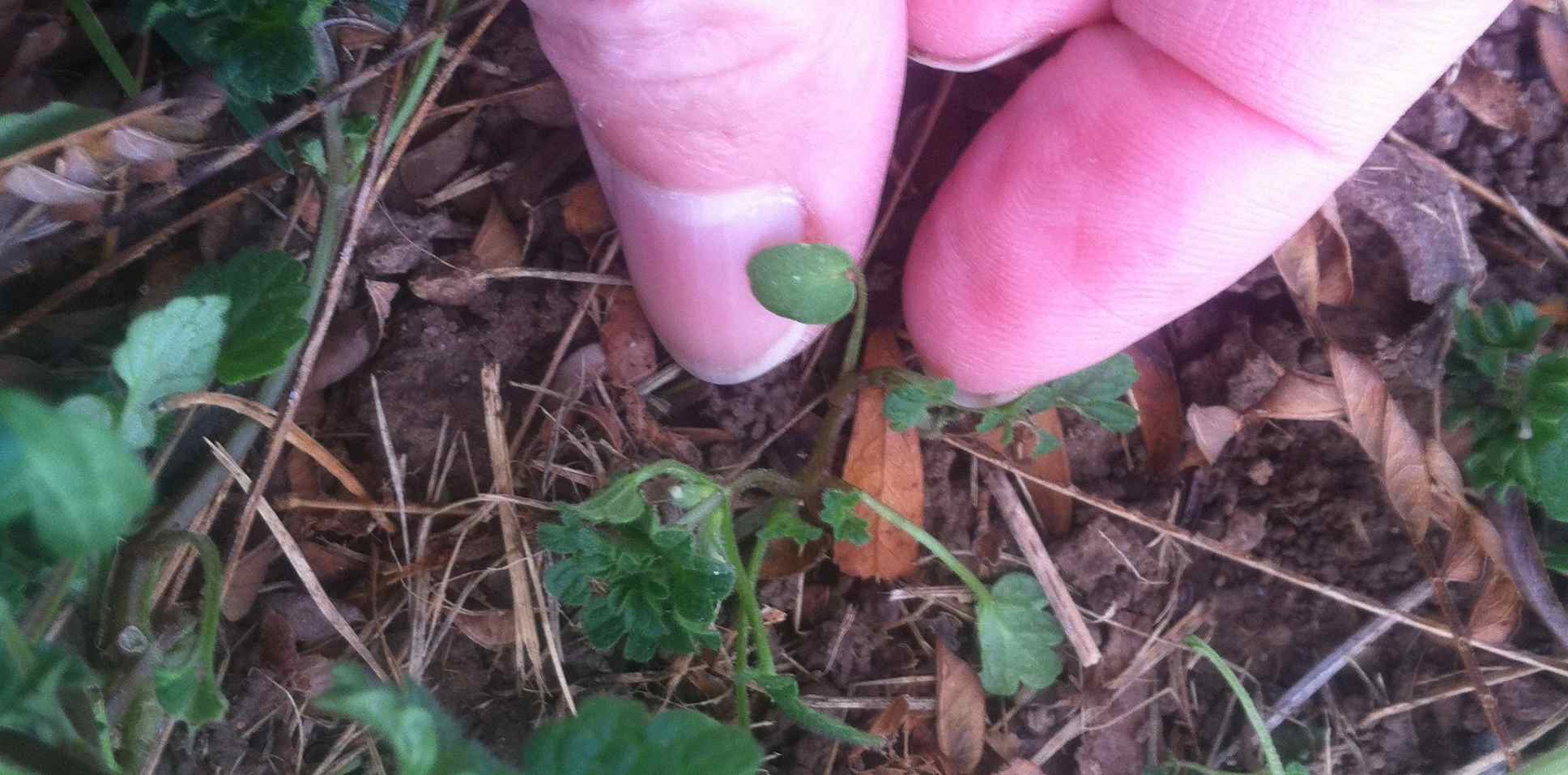
Common henbit is sometimes confused, by gardeners, with purple dead nettle (which has more triangular and purple leaves), creeping Charlie (a perennial,) and speedwell. From my observations, it also looks a little like horehound, except that horehound definitely has a more upright habit. My Golden Guide Weeds book says another name for henbit is Dead Nettle and there are perennial species. My backyard henbit is not overtly obnoxious, but it is persistent. It inspires me to work on those chicken tunnels I saw earlier this year. I would put them right over the henbit patches and both the chickens and I would be very happy.